missing translation for 'onlineSavingsMsg'
Learn More
Learn More
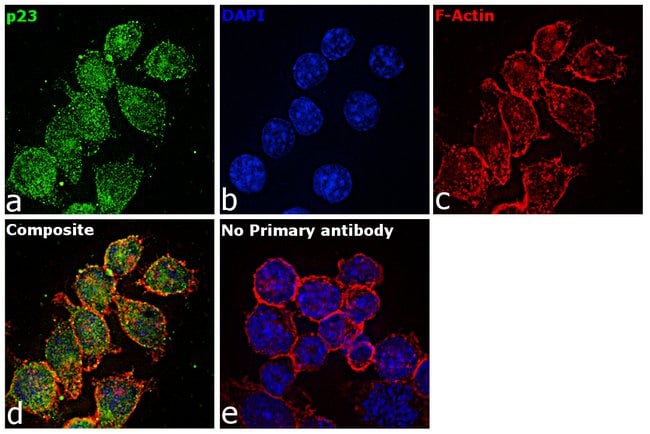
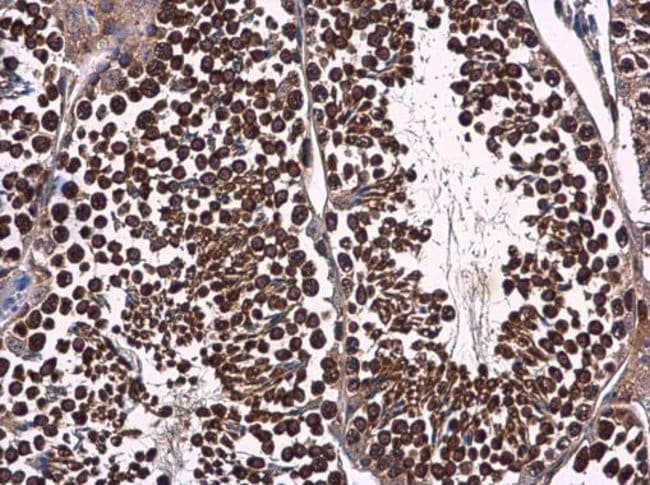
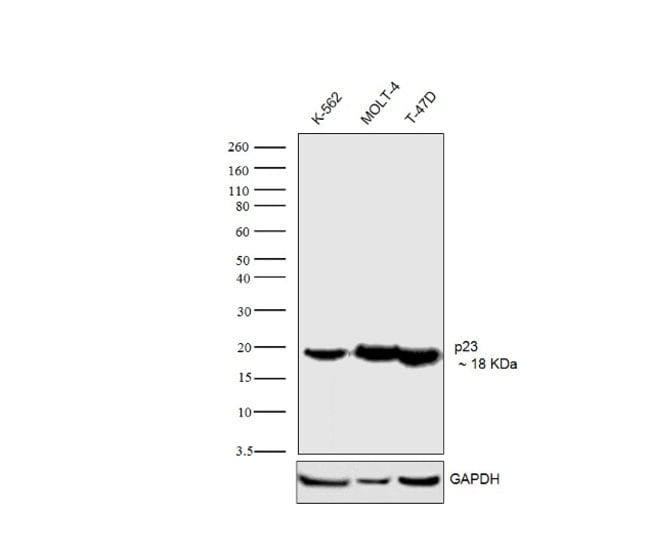
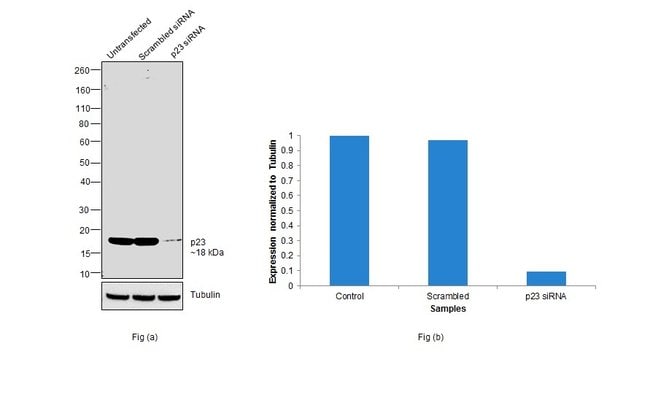

Invitrogen™ p23 Polyclonal Antibody

Beschreibung
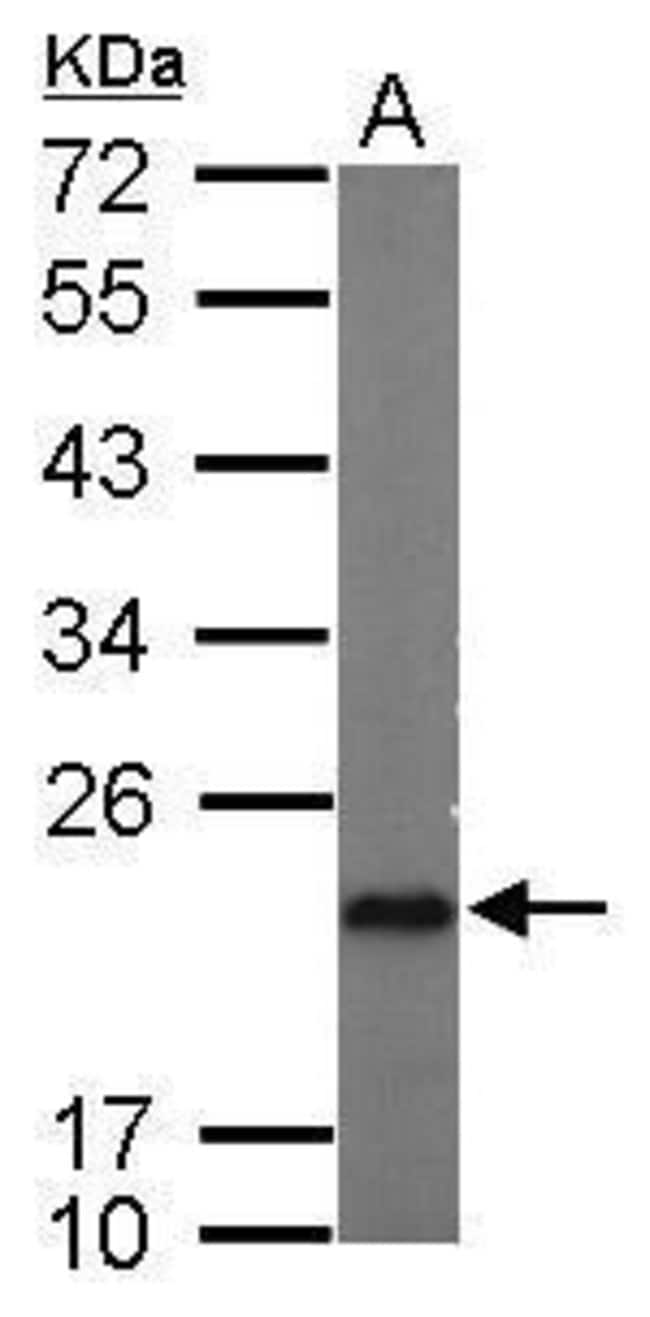
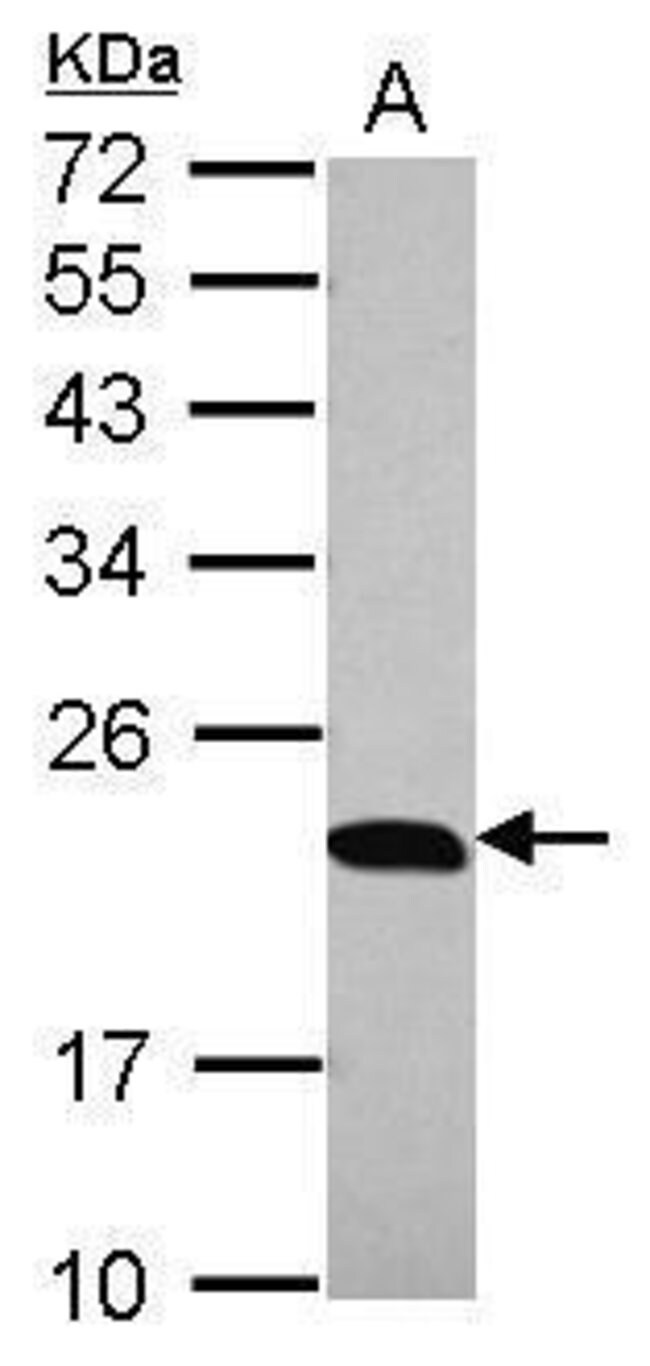
Recommended positive controls: 293T, A431, Jurkat, Raji, mouse brain. Predicted reactivity: Mouse (98%), Rat (98%), Xenopus laevis (84%), Chicken (96%), Rhesus Monkey (100%), Chimpanzee (100%), Bovine (100%). Store product as a concentrated solution. Centrifuge briefly prior to opening the vial.
Steroid receptors are ligand-dependent intracellular proteins that stimulate transcription of specific genes by binding to specific DNA sequences following activation by the appropriate hormone. Prior to activation, steroid receptors associate with a number of different proteins in both a stable and transient fashion. Steroid receptor complex proteins include heat shock proteins (HSP70 and HSP90), immunosuppressant binding proteins called immunophilins (the FK506 binding proteins, FKBP52 & FKBP54 and the cyclosporin binding protein, CyP-40) and at least three other proteins termed p23, p60 and p48. p23 along with HSP70, HSP90 and p60, combine with progesterone receptor (PR) as members of a transient intermediate complex. Cloned human p23 encodes a protein of 160 amino acids that is highly conserved between species and shows no homology to previously identified proteins. p23 is a highly acidic phosphoprotein with an aspartic acid-rich C-terminal domain and multiple potential phosphorylation sites. In vitro studies have suggested that p23 binds to HSP90 and is necessary for the binding of HSP90 and CyP-40 to PR. While neither its exact function nor mechanism of action have been identified, p23 appears to be an important factor in PR function.

Spezifikation
Spezifikation
| Antigen | p23 |
| Anwendungen | Immunohistochemistry (Paraffin), Western Blot, Immunocytochemistry |
| Klassifikation | Polyclonal |
| Konzentration | 1 mg/mL |
| Konjugat | Unconjugated |
| Zusammensetzung | PBS with 1% BSA, 20% glycerol and 0.01% thimerosal; pH 7 |
| Gen | Ptges3 |
| Gen-Zugriffsnummer | Q15185, Q9R0Q7 |
| Gen-Alias | 5730442A20Rik; Co chaperone p23; cPGES; cytosolic prostaglandin E synthase; cytosolic prostaglandin E2 synthase; Hsp90 co chaperone; Hsp90 co-chaperone; LOC100351480; P23; p23 cochaperone; progesterone receptor; progesterone receptor complex p23; Prostaglandin E synthase 3; prostaglandin E synthase 3 (cytosolic); prostaglandin-E synthase 3; Ptges; PTGES3; ptges3 {ECO:0000250; RGD1561913; sid 3177; Sid3177; Tebp; telomerase binding protein, p23; telomerase-binding protein p23; unactive progesterone receptor, 23 kD; UniProtKB:Q15185} |
| Gensymbole | Ptges3 |
| Mehr anzeigen |
Name des Produkts
Indem Sie auf Absenden klicken, erklären Sie sich damit einverstanden, dass Fisher Scientific sich mit Ihnen in Verbindung setzen kann, um Ihr Feedback in diesem Formular zu bearbeiten. Wir werden Ihre Informationen nicht für andere Zwecke weitergeben. Alle bereitgestellten Kontaktinformationen werden in Übereinstimmung mit unserer Datenschutzrichtlinie aufbewahrt. Datenschutzrichtlinie.
Haben Sie Verbesserungsvorschläge?